
I Hate Labour! But...Wait...Why?
Labour suffered heavy misinformation during and post Covid. They've done well to regain public trust.

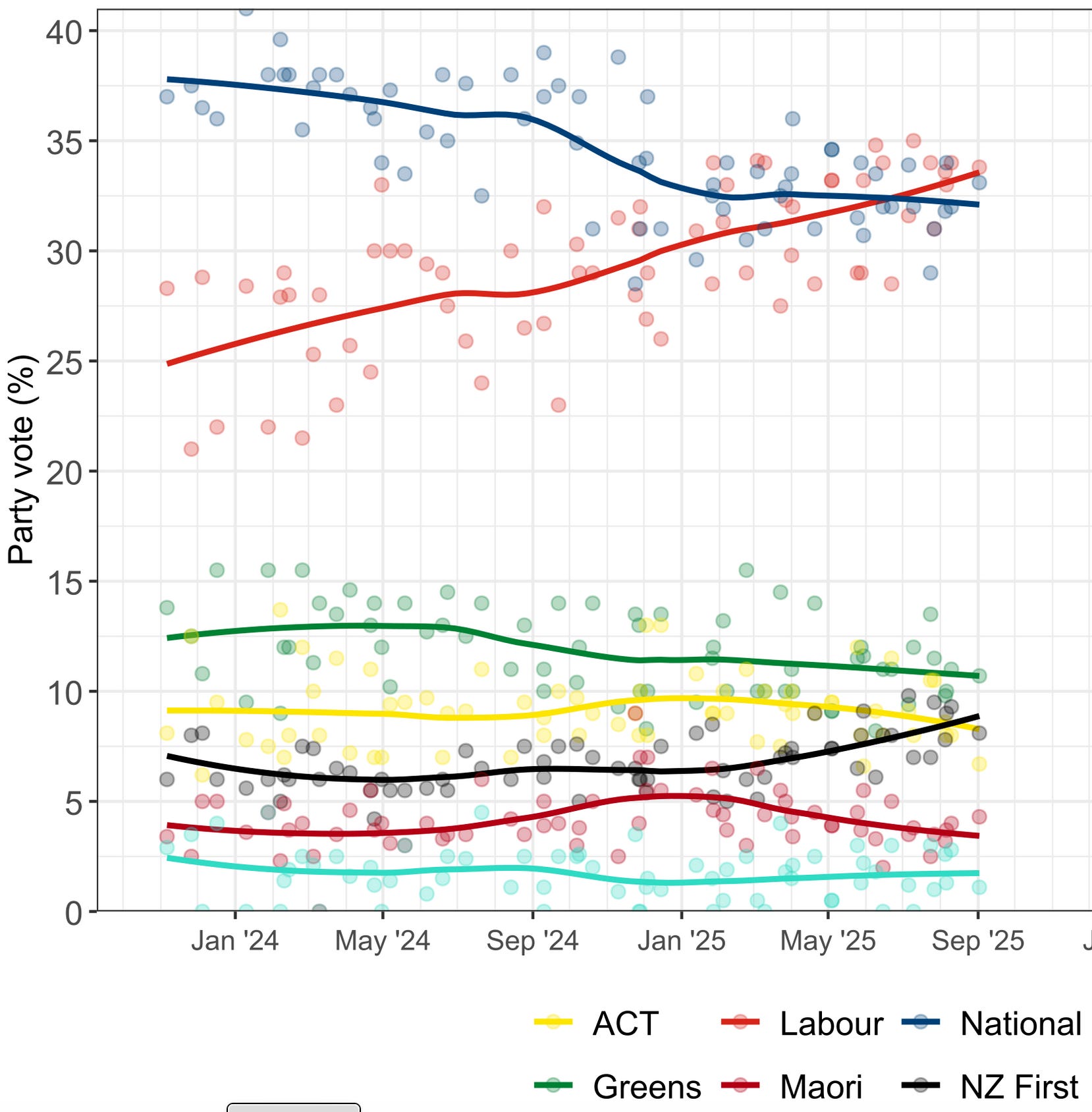
Labour suffered heavy misinformation during and post Covid. They've done well to regain public trust given where they were.
Even so, Labour remains under attack by many, from left and right. The most common attacks are:
They are bad financial managers and borrowed too much! (This is NZ’s big lie - more on that below)
Why don’t they come out with policies 12-18 months before an election?
Why won’t they fix the country’s problems?
Why didn’t they fix the country’s problems?
They are neoliberal lite
They are not left enough!
They are too left!
They are going to sell us out like Starmer did
I want to see more emotion from them!
Why aren’t they speaking up more (hint: Media)
They’re just going to tax me!
They’re not going to go hard enough on taxes
They could work but will just be controlled by the Greens / Te Pati Māori
They don’t support the Greens / Te Pati Māori
They help Māori too much
They are not helpful enough to Māori
And on it goes.
The facts on their performance are clear though.
Under Labour’s last term:
Police numbers grew to the largest this country has ever seen - one officer for every 480 New Zealanders, restoring police after John Key demolished it to 1:544 Kiwis
Post Covid, our debt remained one of the lowest debt to GDP ratios in the OECD. Labour basically borrowed $88bn over six years, ~3/4 of it during Covid to save lives and buffer the economy. National will borrow ~$110b in 5 years.
Govt. debt is not intrinsically negative - it’s about what you do with it that matters - covered here and further below
Still, their reputation here is undeserved
Economically, Labour left the country in solid shape after a global pandemic. A fact confirmed by Treasury when they said National “inherited better finances” than expected and projected no recession, and steady wage growth. Other economists predicted a “soft landing” in late 2023. Post-Covid inflation always fell in line with original forecasts. Now we see key economics statistics frequently worse than during the Global Financial Crisis.
Labour saved our educational institution Te Pūkenga while National tore it down, moving many colleges to the brink of bankruptcy and ignoring Treasury warnings
Labour created the Māori Health Authority, not because of separatism or “racism”, but because years of expert research advice showed Māori suffered worse health outcomes consistently because of distrust in the systems, access, poverty, and they were consistently found to be late when diagnosed with serious diseases, rendering higher death rates. The Māori Health Authority was a small investment that served the greater needs of everyone, including Māori and Pākehā.
For those who care about the dollars, the cost of not caring for Māori health is costed from $863 million per annum to $5 billion per annum.
Do you know how much the Māori Health Authority cost? About $100 million to set up and the same to run.
Labour implemented stricter tax evasion laws around trusts and started reforming electoral donor laws. The trusts law was abandoned by Nicola Willis and David Seymour accused Ardern of “screwing the scrum” by improving electoral donor transparency.
There are other things:
Labour oversaw 14,000 - 18,000 new homes built, and their budget sustained builds into 2024. Chris Bishop plans to oversee a net 400 homes a year and stops in 2026 while he sells land to private developers, who nearly all donated to National/ACT.
Labour was making positive progress on ambitious child poverty targets - overseeing a significant drop in poverty between 2018 and 2020.. Whereas National slashed child poverty targets as soon as they got into office (rendering 16,000 more kids into hardship), and do not even care.
Labour strengthened labour laws, like fair pay agreements, pay equity, working wage, no more 90 day trial and fire etc. National and ACT are stringent union busters, gaslighting and rolling workers’ rights back decades
Labour and Greens created and signed NZ’s deep sea trawling agreement for the Pacific, protecting 70% of our biodiversity environment - endorsed by all countries including Australia and the US. NZ First and this government ripped it up as soon as they got into government, blocking international co-operation. (Here is a video of the destructive practice)
Labour implemented a live export ban on animals - National are working on bringing it back.
Labour implemented a law to protect against incorrect labelling information on suncreens and other health products. NZ First & ACT ripped it up under urgency, earning praise from donors.
Labour helped prevent massive rate hikes across the country, and potential Council bankruptcies through 3 Waters debt load structures. National repealed all of it, with local credit ratings slashed & at least 18 councils downgraded, elevating costs for ratepayers.
But none of this is the entire point here - the point is the accusations I see about Labour. And the same perplexed response in me that compelled me to write articles like Tamatha Paul Pile On Unjustified.
i.e. I think it’s important to be contextual regardless of the topic or side.
Here’s my responses to the most common criticisms I see:
Labour are neoliberal / neoliberal-lite
Neoliberalism is a system that heavily favours privatisation, reduced government spending, de-regulation, and ‘free market’.
If I look back, Jacinda Ardern’s Labour tried very hard to “entrench” water assets to protect it from privatisation.
She suffered significant political blowback, including from the upstanding left, who disapproved of Labour’s actions.
But Labour tried hard on it, and looking back I think I know why. Even as Luxon mocked Labour as “scaremongering” about National’s privatisation ambitions, I believe Labour knew what was at stake.
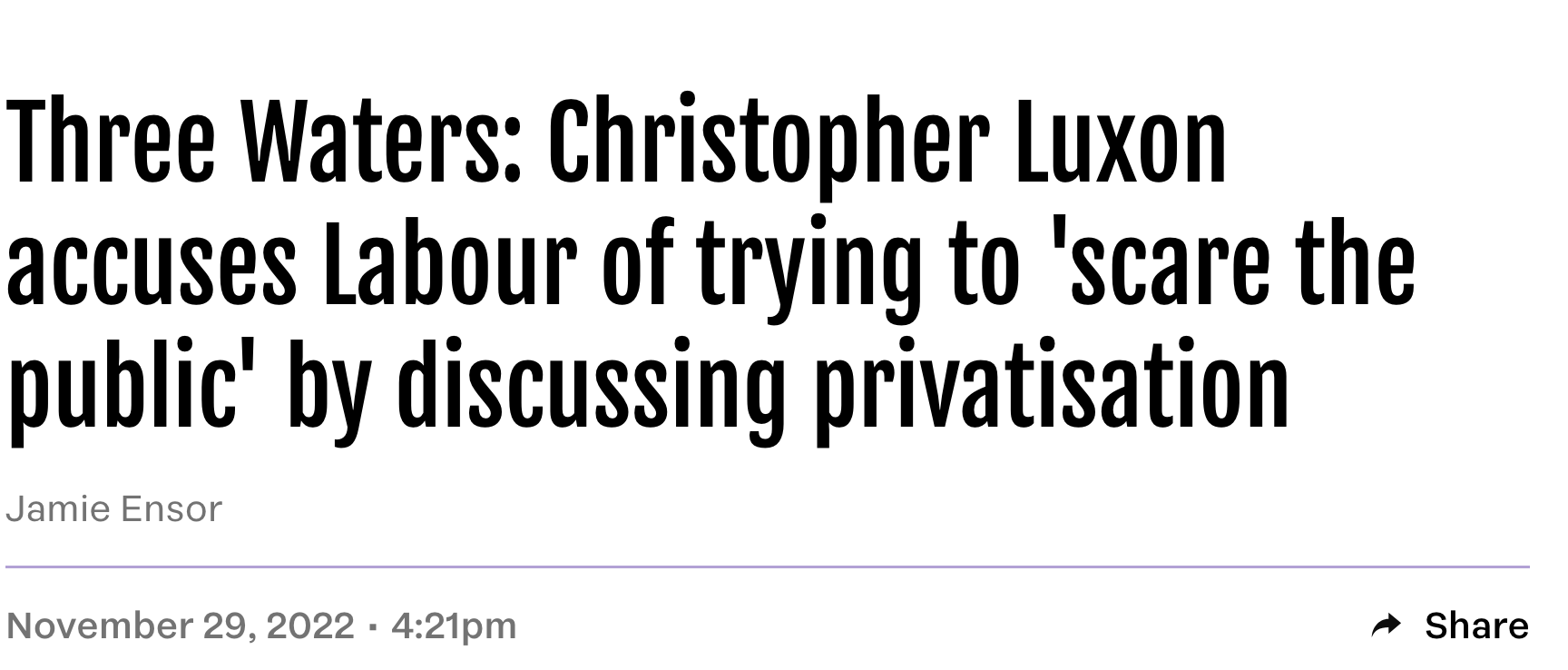
Now National is openly touting privatisation as the answer to everything, and selling NZ off to foreigners wherever they can! Bishop has indicated if National win a second term, it’s open privatisation season, and he already wants local councils to privatise assets.
Labour got 3 Waters up and running too - until Simeon Brown threw away $1.2 billion of investment and claimed “Local Water Done Well” would be better. It’s not - it will be more expensive1 & has caused rates to skyrocket - a point pre-warned by Kieran McAnulty over and over again.
Would a neoliberal government suffer fatal wounds to try to do the right thing by the country? Try to shield our assets from privatisation? Try to honour Te Tiriti o Waitangi? Try to fix up decades of inter-generational infrastructure issues in a country?
I don’t think so.
I’ve seen people angry and suspicious of Labour for talking to business groups but personally I think there’s a reason business donations effectively dried up for Labour over the last years. Their policy was frequently pro-worker and pro-community/environment/health.
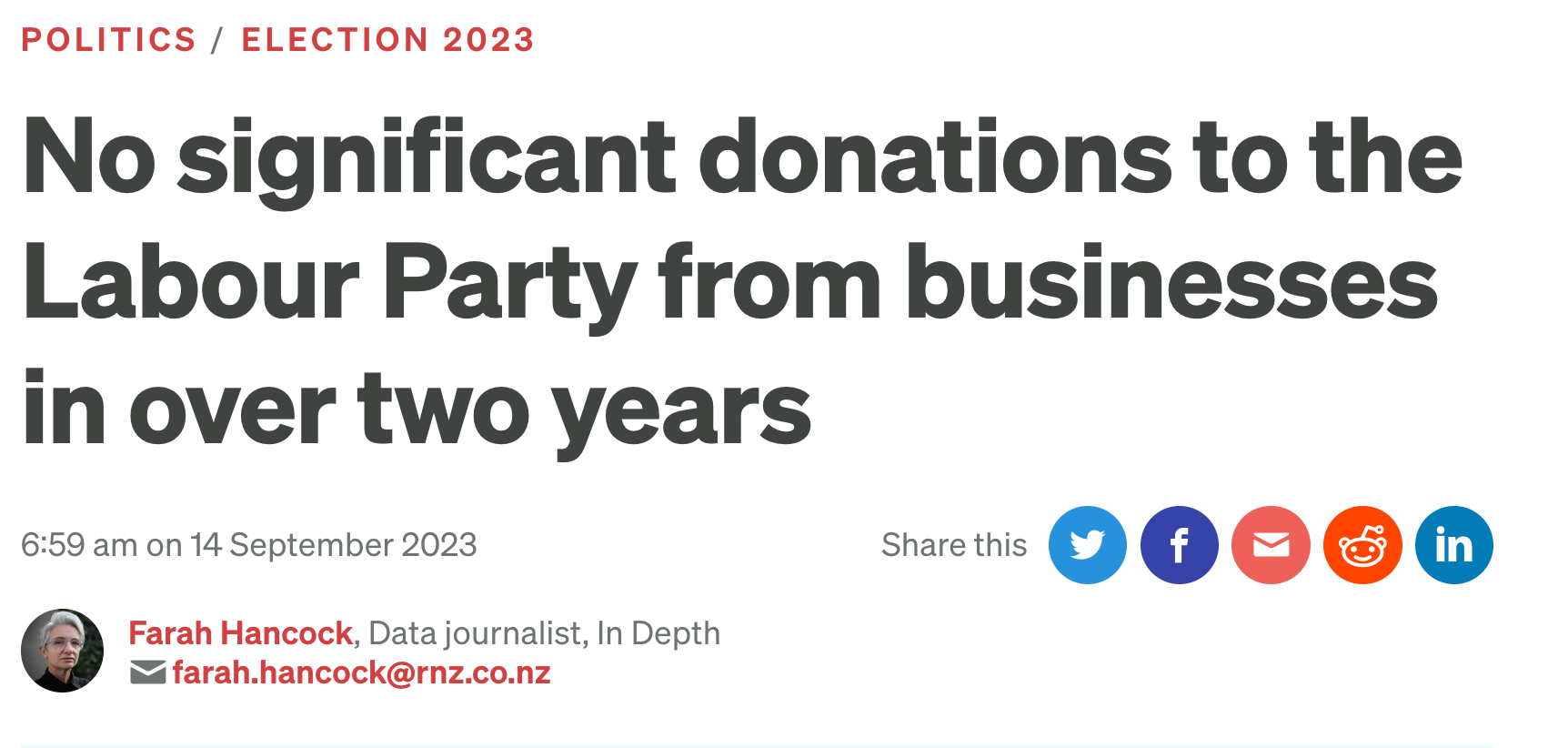
Then there is our system. Until we have a world and economy where businesses no longer employ and invest, why would Labour ignore business interests? Why would they not consider business owners?
And blaming the current Labour party for decades of policy decisions is a stretch for me. The fact is that for many, things did improve and material benefits accrued, so it was ultimately a collective of us that enabled mostly (but not exclusively) right wing governments to push their agenda on privatisation and the like.
Too many are using the evidence of what we see today to litigate against a party made of up people that are also largely inheriting generations of decisions (from all parties).
All governments can only work with the present.
But what I hear you now say is “No, they are neoliberal-lite, which means they exhibit some of these characteristics”.
And why shouldn’t they? Do we want our government running gymnasiums or catteries? How about farms? Sure we can move towards more of a communist/socialist model - but let’s not pretend those models are perfect either.
I’m not arguing that we shouldn’t change - I’m just saying we need to look more deeply before we jump.
Personally, I don’t believe we need an over abundance of bureaucracy or to discourage private innovation, alongside public investment. Again, unless someone is proposing entirely new models, which is also very welcome, most developed nations are a mix of social enterprise and private efforts. And for years that has included levels of partnership and over time, learnings about their pros and cons.
Let’s not use present day wisdom to judge any well intentioned calls, or who could ever measure up?
The issue we have with recent right wing governments is they are no longer “conservative” - they are now alt-right ideologists captured by uber-wealth/oligarch/industry interests, and corrupted policy tanks, which exert pressure and money in order to install friendly politicians to implement their policies.
And it’s this extreme imbalance and corruption that is the source of the issues. And it’s captured media which help sway the public their way, and populist/culture wars that allow these groups to cement political power.
Labour aren’t allowed to critique left wing parties
While those in the right like to genuinely scaremonger around Labour being “controlled” by the Greens and Te Pati Māori - very ironic considering the National Party’s vivid weakness, and that Labour were the only ones who held NZ First in check last time - some of the most vivid wrath comes from left leaning party voters too.
I remember Chris Hipkins expertly defending Te Pati Māori from their unfair suspension penalty in Parliament. I also remember Chlöe Swarbrick swinging out forcefully when she was first elected leader in March to say she wanted the Greens to “lead” the left, to which Hipkins responded ‘Labour aren’t the opposition here’.
The Greens reinforced the leading voice message again this month, which is their absolute right to. But whereas Swarbrick enjoys applause for inferring what she did, Labour speaking up is often met with extreme emotion.
For example, when the Green Party budget came out, Hipkins critiqued it as ‘some positive, some negative’, but pointed out that not everything had been costed. He has explained his party is taking time to cost the implications of National’s policies, and not everything is out in the open yet - and I think last week’s revelation of an early $8.5 billion hole in National’s numbers reinforced the intelligence behind that.
The almost $9,000 million gap is not all - National are leaving fiscal bombs everywhere, from no longer funding school lunches, to signing 10 year health privatisation contracts to the $120m police fiscal cliff.
The point is: Labour are allowed to comment. I can’t see why they shouldn’t - they represent a major party which will always be asked to comment on policies of the day.
Labour need to cut the debt cap now!
My good friend Annie believes the current debt cap of 30% of GDP is criminal. Our official limit is actually 50% of GDP. And I’d argue it’s more nuanced:
As Ganesh R Ahirao points out, it is private debt that is far more problematic in our country. As of September 2024, private debt was 136.01% of Nominal GDP. And most of that profit goes overseas, rendering our investments (mainly in housing) the most critical productivity drain.
Even intuitively many of us might realise that govt debt is the preferred option - central governments can borrow at cheaper rates, they are nothing like a household at all despite National’s propaganda, central govt raises over $120 billion of taxes each year, and debt can help our country grow faster and support long term infrastructure, growth, well-being etc.
There’s nothing fundamentally wrong with government debt at all if used to build and invest in Kiwis responsibly and strategically, and to protect our well-being and future. And that’s what Labour did during Covid too, saving over 20,000 lives and upholding our economy at the time.
NZ was not alone.
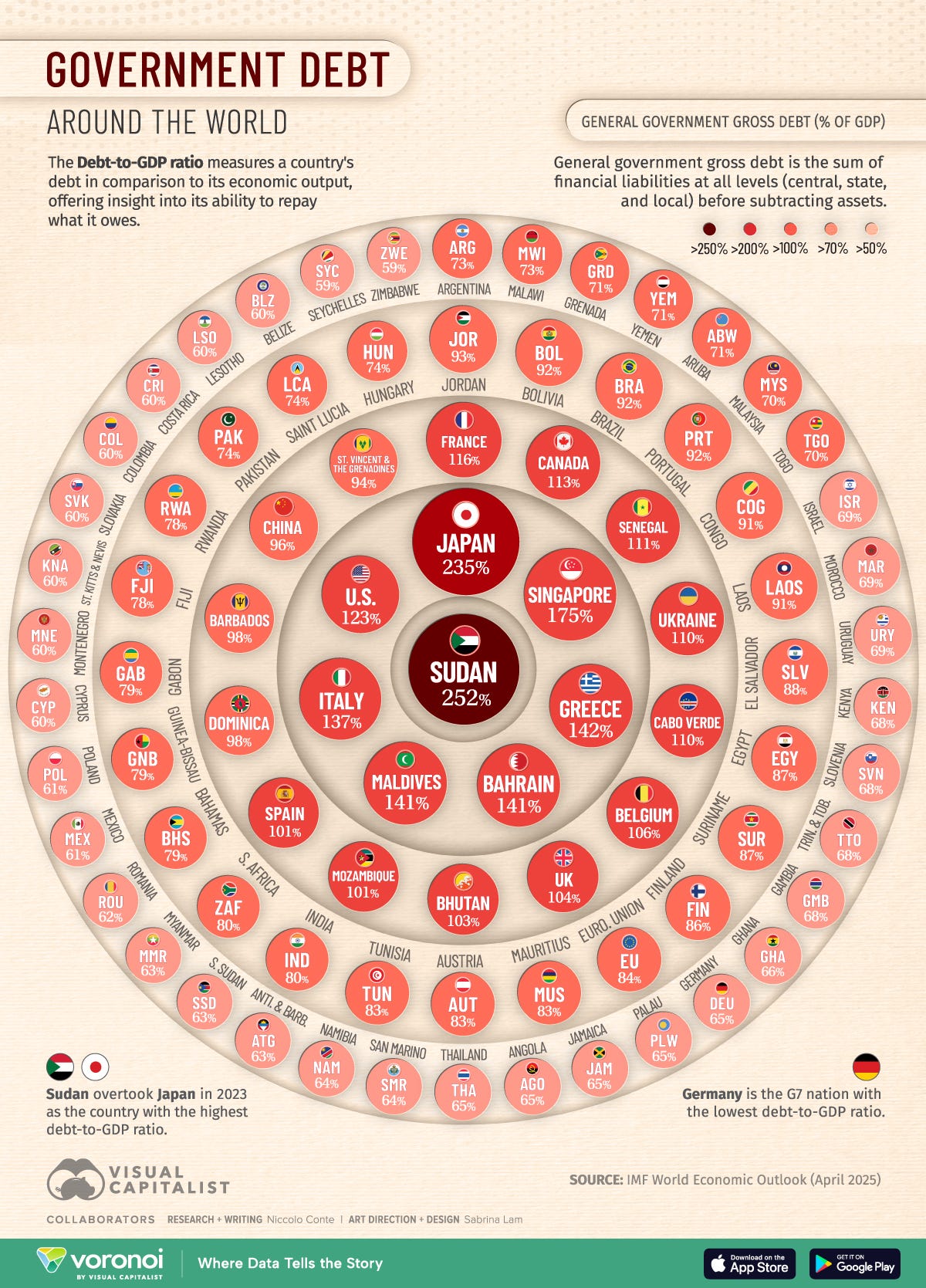
The average gross debt-to-GDP ratio in OECD countries is 85% - ours is 47.7%. Many countries’ debt is now above 100% of GDP, including the US, the UK and France, while Japan’s is above 200%2
The truth is that the debt conversation in New Zealand is particularly unintelligent, and has been hijacked by right wing hawks who now ensure that the majority of Kiwis are afraid of government debt in highly illogical ways - ways which are hurting our country.
It’s clear, isn’t it? Our corporate media and our media landscape writ large, including from a misinformation riddled RNZ column yesterday from Susan Edmunds, have dominated conversations for years.
In Australia, Rupert Murdoch press attacking national broadcasters, “debt” and “red tape” are mere shadows and echoes. Here, they are taken up by mainstream commentators. We are all sorely remiss for it.
So going back to Labour.
Bad?
No, it’s clear that Labour chose to exceed the conventional debt caps during Covid - and saw no hesitation in doing so.
They felt it was the right thing to do - and did it. And we are still one of the lowest debt to GDP ratios in the OECD.
But where they are being punished is by media commentators, vested lobby pressure groups like Taxpayers Union & NZ Initiative, and right wing hawks who have all vested into a misinformed view that govt debt is poison.
But that’s not all - it’s a belief widely perpetuated and invested in by too many voters.
Labour lost the election largely because of preconceptions like this, and National/ACT/NZ First still spend inordinate amounts of time attacking Labour because they know they have educated their voters to believe this big lie.
Govt debt is not poison - and nearly every other developed country is higher than ours.
Singapore, a country which National praises all the time, has a debt to GDP ratio of 175%
Interestingly, the lowest debt to GDP ratio country in the world is Afghanistan
It should be bloody obvious by now that where we lose clarity is in the details, in the how, not the what.
But but but - to put decades of hijacked debt conversations from right wing hawks, and the wider credit ratings environment, and low productivity over generations, and a populace that has absorbed such lacking debate, on Labour alone, I feel is unfair.
Like it or not it’s not “courage” that Labour lacks, in my view. Look at how they are handled Covid, warts and all. Look at how they responded.
It’s the education of voters that needs help. Media is lacking too.
Labour are not going far enough!
Labour has wisely chosen not to release its policies prematurely.
One, they can’t cost it out until the books become clearer. There are probably more $8.5 billion type gaps (hopefully smaller though) in Nicola’s budget to be uncovered, as well as National’s “fiscal cliffs” on everything from school lunches to police. But more importantly the financial state has to include inflation and the like at a time when many are freaking out over the cost of living.
Two, what about the election?
Henry Cooke, who’s now The Post’s deputy political editor wrote an article last month looking at the statistics around swing voters, which typically determine election outcomes between National and Labour .
The article is published on Spin Off now.
Cooke writes:
“[Swing] voters made up about a fifth of National’s total support in NZES. That may not sound like a lot, but losing it to Labour entirely would certainly be enough to lose the election, all else being equal.”
The main category of swing voter is “a 56-year-old pākehā woman living in a house she owns.”
And these are some of the graphs he produced -
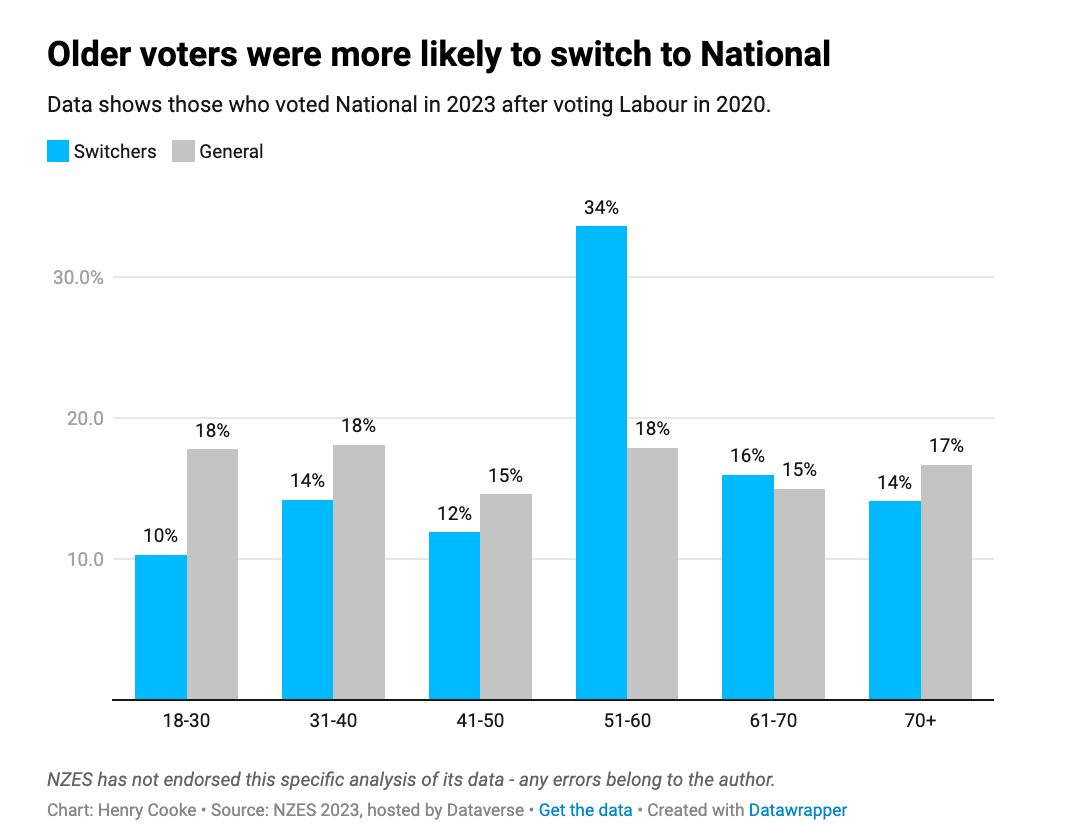
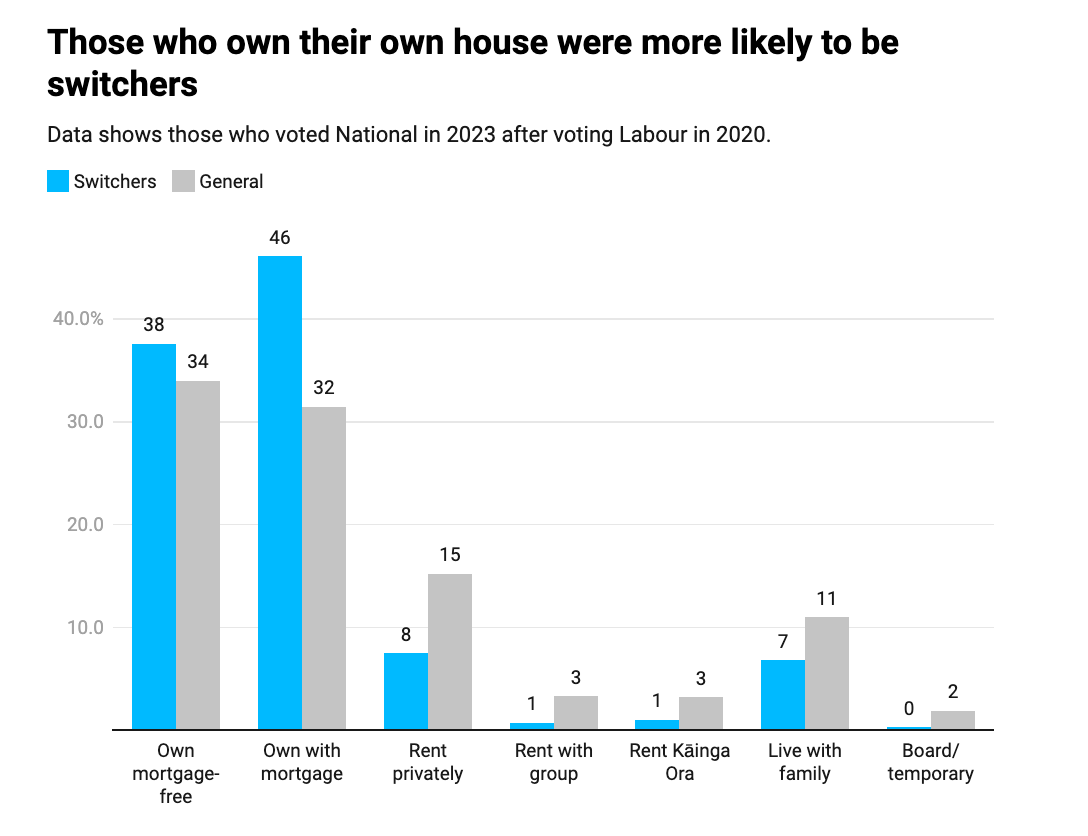
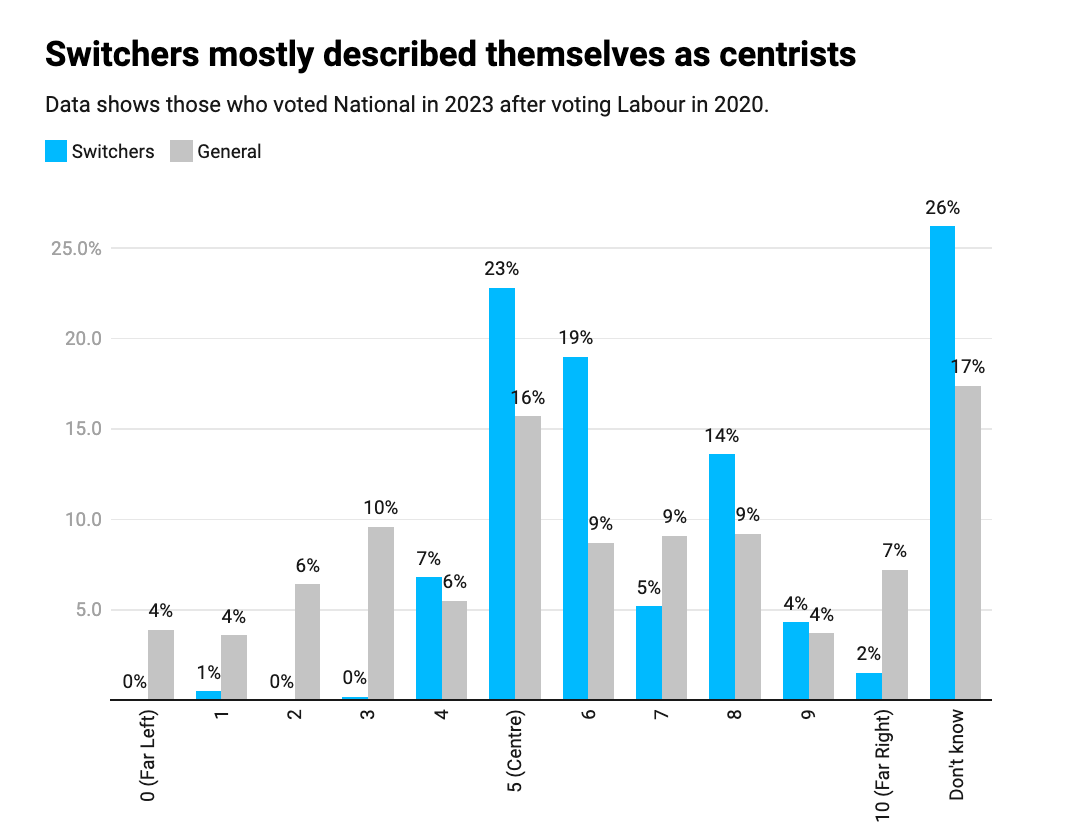
People on the left yearn for Labour to ignore this group, but given the margin, should they? You tell me.
Three, I do think Labour need to offer a degree of “oomph” - something that people crave for i.e. something that feels like a shift - but they also need to do it in the confines of knowing their budget and audience, especially given how the right is incorrectly portraying them. And the pure money/power difference.
Being a minority party is easier in many ways.


The Green Party, a party of values and authenticity, is polling fairly consistently between 10-12% in NZ, find its results comparable to the Australian Green Party polling numbers.
To measure how effective the parties are in the electorate, polling trends can be observed.
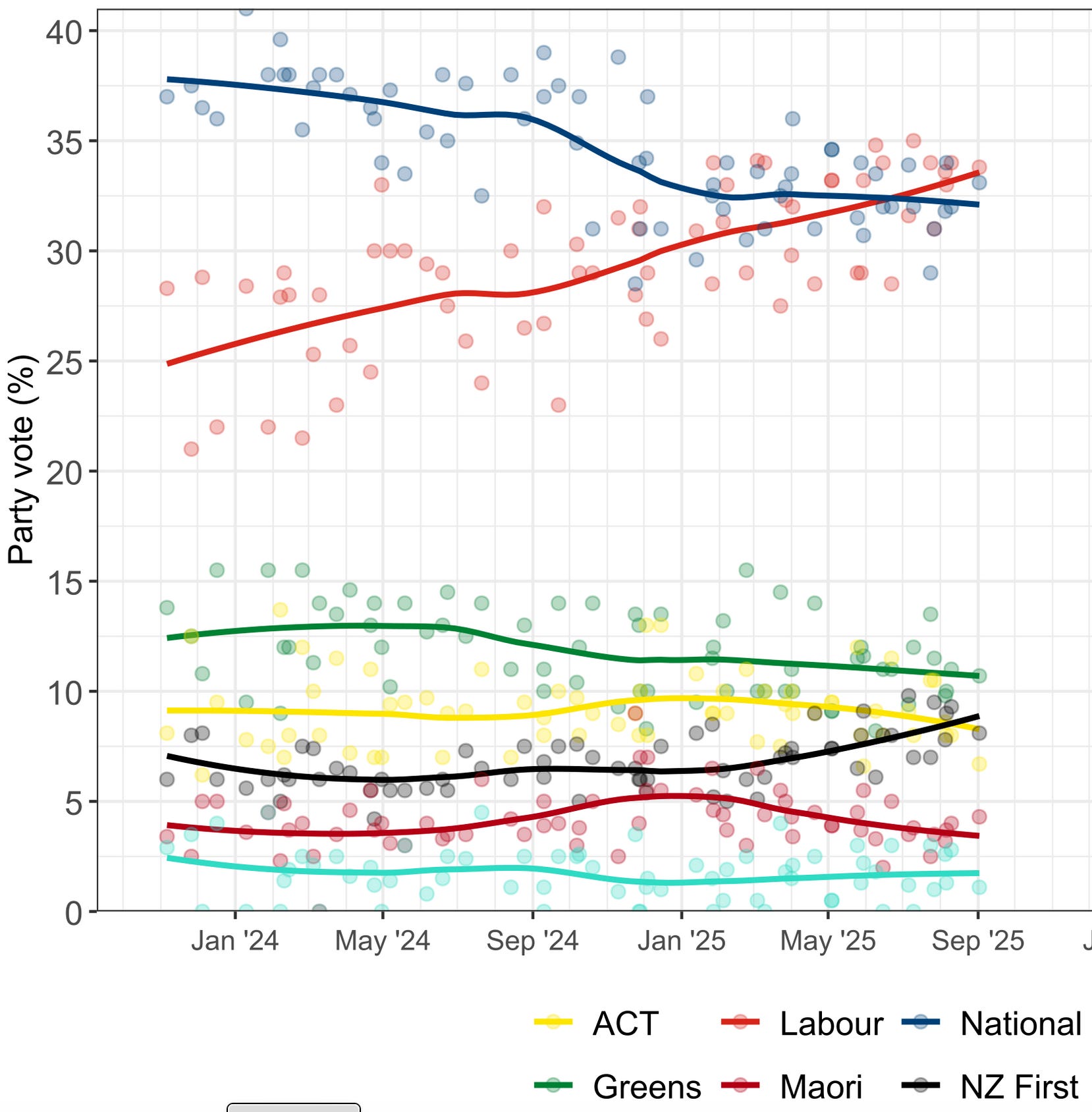
Labour are working to win the election within a much larger base - and its’s a complex task.
Ideally, it shouldn’t be a matter of resentment, but co-operation. And yet undeniably, each party strives to win votes for itself - from Te Pati Māori to Labour to Greens to NZ First to ACT/National. No-one attacks National for trying to secure votes, but as soon as it’s anything on the left, apparently it is Labour’s job, some will say, to help other parties.
This is once again why left wing voters will always be some of the most challenging to work with, in my view.
Labour lack vision!
Do they?
What we see from this Coalition to date is roll back and destroy everything Labour created in the prior government. I know this because I examined the policies in detail last year (Appendix A below)
And that’s with a global pandemic squarely within.
Without knowing the detail, I might have felt the same, but still what I hear frequently is “I am really angry with this government and it’s somehow’s Labour’s fault”
Labour are victims of misinformation and dirty politics too.
How many Kiwis believe the big lies - Māori, 3 Waters, Labour’s handling of the economy, debt, Covid management?
I’d say many, too many.
Why should your anger about the current government be put at the feet of Labour again?
I would have welcomed David Parker’s tax reforms and Grant Robertson also oversaw tax law changes to stop the wealthy evading tax.
We’ll have to wait and see where Labour goes.
What now?
To address any incoming left aligned government, I personally believe what people should address are root causes. When the Tories lost in the UK after 14 years, I didn’t celebrate.
While the UK Tory scam had reached its peak heights, I knew the reasons the Tories won in the first place laid in wait. And Starmer seemed odd in opposition.
I lean towards some Australian media now - where analysis is frequently more bold, intelligent, and the culture not completely toxified with misinformation.
If NZ’s media landscape is not sorted, there’s no victory, no matter who wins. The same culprits will stir trouble at every turn, and misinform & mis-educate the public.
Electoral reform needs to be implemented to weed out corruption and dark money as much as possible.
Lobbying rules need to be made much more transparent
A new government will need to spend a lot more time educating voters, but ultimately the responsibility will be two-way - it’s hard to counter misinformation and the new-right do not care for process or democracy, only power and tactics to keep enough voters on side. It’s not a sure thing.
Bold steps forward will be needed
No! The Time For Revolution Is Now
A friend once pointed to Jeremy Corbyn as an example of what people want now (the UK is a mess, as I expected it would be, after the Tories lost after 14 years of trickle down, libertarian policy and corruption).
But did you know that before the last election, Corbyn was the most unpopular politician in Britain?
In 2019, only 16% of British voters were satisfied with his performance. Irrespective of the reasons back then, everything has to be contextualised
Corbyn’s popularity now mirrors alt-right populist Nigel Farage’s meteoric rise - the front man of the disastrous Brexit campaign, and Winston Peters’ “good friend” - is back with a vengeance.
We are not at the same stage yet but the tides are definitely turning.
I’m not wedded to any political party - but I am quite attached to the idea that if the Coalition government wins a second term, we can say goodbye to New Zealand as we know it almost completely.
Just as Trump is doing to his country.
“Patience”, and its lack of, Sir Geoffrey Palmer identified, is a reason why so many voters are disgruntled and angry. People forget change takes time. People want answers yesterday. People aren’t so willing to abide and endure - or understand complexity, disagreement, and nuance. No, we are all experts, and no, I’m not exempt.
Still, if we want solutions, then we also need to understand costs and impacts, and the journey to get people there.
Misinformation is rife. The ones who push it are too well resourced. But New Zealand still has a core vibrance at heart - many good, caring people reside here. And Te Tiriti o Waitangi presents a cultural view that can enrich the environment and nation.
Final Words
I could write much more on this topic and there are many nuances I cannot cover. I know many people crave change, and a significant reversal to the situation we have found ourselves in. My main interest remains root causes.
I also know if we lose the next election, then it’s game over.
National’s strategists will be doing everything they can to paint Labour as soft on crime, too caring about Māori, and as being responsible for the current economic woes.
The right’s survival depends on these impressions.
Let’s not help them win.
Appendix A -
100 Day Repeal List
This is an inexhaustive list I compiled last year:
Repealed under urgency No more Fair Pay Agreements, a repeal that officials advised would “disproportionately affects women, young people, Māori and Pasifika people.” Brooke Van Velden said repealing FPA would be “good at creating good business environment and therefore good long-term certainty for good employees.” Source: FPA repealed by Minister despite official advice
Repealed under urgency NZ’s planned smoke free laws. Source: 'People want these laws' - more calls to keep Smokefree amendments
Repealed under urgency the Taxation Principles Reporting Act. The Report had required Inland Revenue to report on the tax system's equity, efficiency and certainty. The report was finished but the government repealed it urgently in December 2023 before its release. Source: Government repeals under urgency the TPR
Repealed under urgency Reserve Bank Dual Mandate meaning the RBNZ will focus only on inflation. Note, Australia has a long standing dual mandate for its central bank to focus on employment and inflation, as of December 2023. Source: Reserve Bank dual mandate repeal passes through Parliament
Passing through urgent legislation to bring back 90 day trials for all employers. Previous research from Motu, commissioned by Treasury in 2016, found "no evidence that the ability to use trial periods significantly increases firms' overall hiring, did not appear to affect the likelihood of new hires remaining in the long term, or make workers less likely to move jobs" Source: Government passes legislation to fully reinstate 90-day trials
Reduced the bright line period from 10 years under Labour to 2 years as part of a raft of changes for landlords. This will help people who buy and sell homes after 2 years avoid brightline tax. Source: National's tax plan and how it will be funded revealed
Accelerate early landlord tax cuts to the tune of $3B paid retroactively. Govt also plans to implement no cause eviction. This means landlords can evict tenants without a reason and will not have to apply to the Tenancy Tribunal. Source: Landlords set for early tax refunds under coalition agreement, policy cost tipped to hit $3b and Government’s $3 billion landlord tax cut would be retrospective and trigger some refunds - IRD
Indicated it will review the principles of Te Tiriti o Waitangi, or Treaty of Waitangi, which upholds Māori rights, including the right to autonomy. Also it has signaled plans to scrap the Māori Health Authority, Te Aka Whai Ora, set up to reverse negative Māori health outcomes, and repeal legislation designed to prevent the removal of Māori children from their families. Source: ‘A massive unravelling’: fears for Māori rights as New Zealand government reviews treaty ((Note - since writing this in the day, it has been revealed by evening the Govt has surprisingly fast-tracked the legislation to axe the Maori Health Authority, which would prevent the Waitangi Tribunal from its scheduled hearing on this bill)
Cancelled the Kiwirail Interislander program Sunk costs including $424M + an unconfirmed, unpaid penalty for cancellation despite Kiwirail advising of risks. If re-signed, it would cost 40% more today per Kiwirail's Chairman. Source: No plan ahoy for Cook Strait link and $424 million sunk in failed Interislander and terminal project
Cancelled Three Waters under urgency with sunk costs of $1.2bn from National coffers and leaving Councils with the problem. The 2017 National Party Cabinet memo outlining the significance of 3 Waters is included. Source: Parliament repeals Three Waters programme under urgency and National Govt 2017 Cabinet Memo on 3 Waters
Repeal free prescriptions for New Zealanders. Source: Pharmacists urge incoming govt to keep free prescriptions
Cancel Productivity Commission through a Repeal Bill under urgency i.e.to scrap the Productivity Commission and transfer the budget to David Seymour to set up his Ministry of Regulation. Source:Legislative year begins with ending Productivity Commission
Stop blanket speed reductions Waka Kotahi directed by minister to stop blanket speed limit reductions
Bill to scrap funding of Section 27 or pre-sentencing reports as part of legal aidservices. The Govt was advised there were better options and that it would cost taxpayers more to scrap it, but persisted Source:Prison reforms: Government ditches cultural reports and Scrapped cultural reports won’t save taxpayer dollars
Initiate Kāinga Ora review headed by Bill English with the Govt signalling concern with its operating deficit. Source: Former PM Sir Bill English to head review of Kāinga Ora
Commence an "independent" Coalition Govt. inquiry into NZ's Covid response - a key demand of NZF, as Peters has promised to compensate people who lost their jobs due to the mandates or suffered vaccine injuries. However, there is a separate NZ Royal Commission being conducted which is presentlysoliciting feedback. Source: Coalition government inquiry into pandemic response could undermine Royal Commission and Royal Commission seeks feedback on NZ's Covid response
Ruled out and froze recommendations from the Independent Electoral Review including election donation transparency & fairness. The Independent Electoral Review was established in 2022 to consider how to make NZ's electoral system clearer, fairer, and more accessible. The Review reported back to the Minister of Justice on 30 November 2023 with its final recommendations. Source: Government rejects four voting changes as review lands & Electoral review sets up fight over political donations
Scrapped bill to lower voting age to 16 for local councils. Source: Scrapping of Voting Age Bill labelled 'discriminatory'
Cancelled plans for Te Pūkenga. The government did not want a centralised organisation for vocational education and training but it would take time to come up with a replacement plan, Source: Te Pūkenga: Leaked documents reveal horror financial position for polytechs, insiders spill beans on 's**tshow' meeting with minister & Dissolving of Te Pūkenga will allow separate polytechs be 'the masters of their own destiny'
Cancelled Lake Onslow project Source: Lake Onslow pumped hydro scheme scrapped - Govt Press Release
Cancelled cycling and walking projects across the country Souce: Minister pulls brakes on cycling and walking initiatives
Cancelled the Auckland Light Rail program Source: National-led government officially cancels Auckland Light Rail plans
Cancelled Let’s Get Wellington Moving infrastructure program Source: Major Wellington infrastructure project scrapped
Repealed under urgency aspects of the Resource Management Act. While it rolled back Labour's resource management reforms, including measures to improve environmental protection and reduce pollution, the new Coalition Government kept the fast-track consenting scheme and the spatial planning boards introduced by Labour. Source: Bill to repeal Resource Management Act replacements passes
Shane Jones fast-tracks mining in New Zealand and assures investors their mining applications will be safe. Last year, he said that “We are going to extract the dividend from Mother Nature's legacy on the DOC estate in those areas previously called stewardship land,” in signalling, “mining is coming back.” He called NZ’s climate objetives “a dreamy fairytale.” Source: Shanes Jones declares war on nature
Repealed Clean Car Discount by 31 December. Source: A rush to repeal Today’s press shows that repealing the CCD will cost twice what it saves.
Stop designation of any new Significant Natural Areas being declared in a supportive move to farmers but against environmentalist advice. Source: The new Coalition Government initiates moves to stop any new designations of private farmland as Significant Natural Areas (SNAs)
Introducing fast track consents in a move labeled as No Community Safe Under Government’s Proposed Fast-Track Consenting Bill The new scheme will allow new development and commercial projects to be approved anywhere in the country by Ministers with little to no oversight. Although there is a Govt nominated expert panel, it would have only “limited ability” to decline the consent. Source: Government defends new ‘fast track’ consents bill Labour slams as ‘Muldoonist’ and Fast-tracking consent bill backed by seabed mining company eyeing Taranaki
Abandoned proposal on deep-sea trawling. Shane Jones leads NZ to make an abrupt about-turn on a deep-sea conservation measures. Source: New Zealand backs away from deep-sea trawling restrictions
Fast track resource consents for the fisheries industry including the 2500-hectare Hananui open ocean salmon farm off Stewart Island, which was declined in August 2023, ocean finfish aquaculture trials in Tasman Bay, and the bid for more mussel spat farms in Marlborough Sound. Source: Seafood industry donors lobby Jones over wine and oysters
Preparation to reverse the fishing boat camera monitoring regime and remove cameras from fisheriesafter Shane Jones's biggest donor requests it. Source: Big donor’s ask: Minister reviews cameras on fishing boats
Slash public services across the board by 6.5% or 7.5%, to try to get $1.5bn to make up the deficit from tax cuts - leading to multiple agencies sounding alarm bells. These include NZDF who said this would reduce NZ's defence capabilities and ground aircraft, Police warning this might impact front line staff, Corrections pointing out ongoing staff shortages, Justice warning of significant risks to judicial,and Customs increasing the risk of gang drug importations. Source: The public service agencies asked to cut spendingand Yes minister, the cupboard is bare
Intention to amend the Overseas Investment Act to reduce ministerial scrutiny of whether overseas investments are in New Zealand’s national interest. The act requires overseas investors to obtain consent from the Overseas Investment Office (OIO) before acquiring interests in significant business assets, sensitive land or fishing quota. As it stands, ministers are able to make such decisions in the national interest. But Seymour says this hampers wealthy investment from overseas and intends to change that. This was part of the ACT - National Coalition Agreement and has not been tabled. Source: Govt to free up foreign investment in ‘sensitive’ NZ land and assets
Stated intent to reverse the live export ban. The SPCA is urging the Government to rethink its election promise to reverse the ban introduced by the previous government and bring back the export of live, farmed animals on ships. A nationwide protest will be held on the 25th of February, 2024. Source: SPCA urging govt to rethink reversing live export ban and Nationwide Rallies To Be Held To Protest Government's Live Export Plan
etc.
Simon Watts rates cap bill will hide this
Source: Spinoff, Alice Neville - “Should we fret about public debt?”
Sorry folks, I've corrected 4 grammatical errors post-publication. My proof read editor will be hired any day now. (last part is unfortunately a joke)
Your column is brilliant MountainTui. I am saving it to use to persuade against those who have accepted the Coalition's huge pile of misinformation and lies. The forces against your factual material is the well oiled groups aiming to destroy our democracy.
Every one must read it and absorb.