
How Wellington's Moa Plant Disaster Turned Into A Hatchet Job
NZCPR, founded by former ACT Party MP Muriel Newman published an article in Scoop putting the Moa Plant sewage disaster at the feet of Tamatha Paul. But they omitted critical context. Opinion/analysis

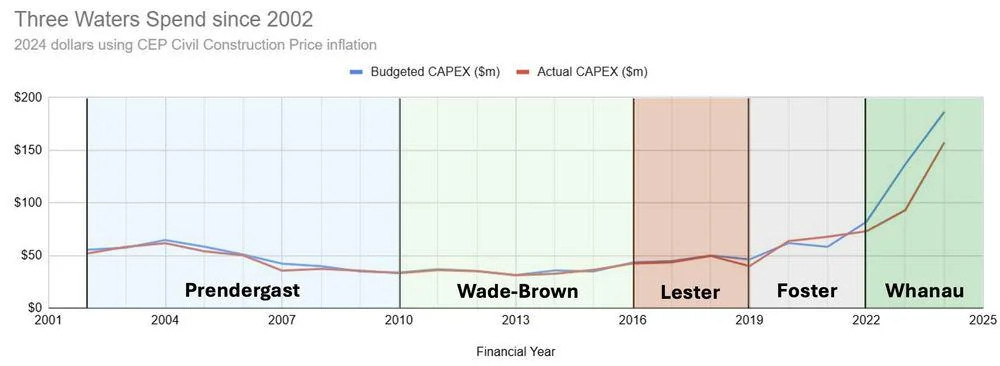
QUICK BACKGROUND
Wellington’s Moa Plant is managed by French multinational contractor, Veoila, that has a history of sewage maintenance failures and multi-million dollar payouts
Wellington Water is responsible for the day to day maintenance and oversight of Moa Plant, and oversees Veoila
Former Mayor Tory Whanau and a majority of WCC Councillors previously pushed for Wellington Water chairperson Nick Leggett to resign - specifically citing poor contractor management
Their attempt failed, with some, such as Porirua's mayor Anita Baker staunchly defending Leggett
Leggett resigned recently after the 2026 Moa Plant failure. Wellington Mayor Andrew Little called it “the right thing to do”.
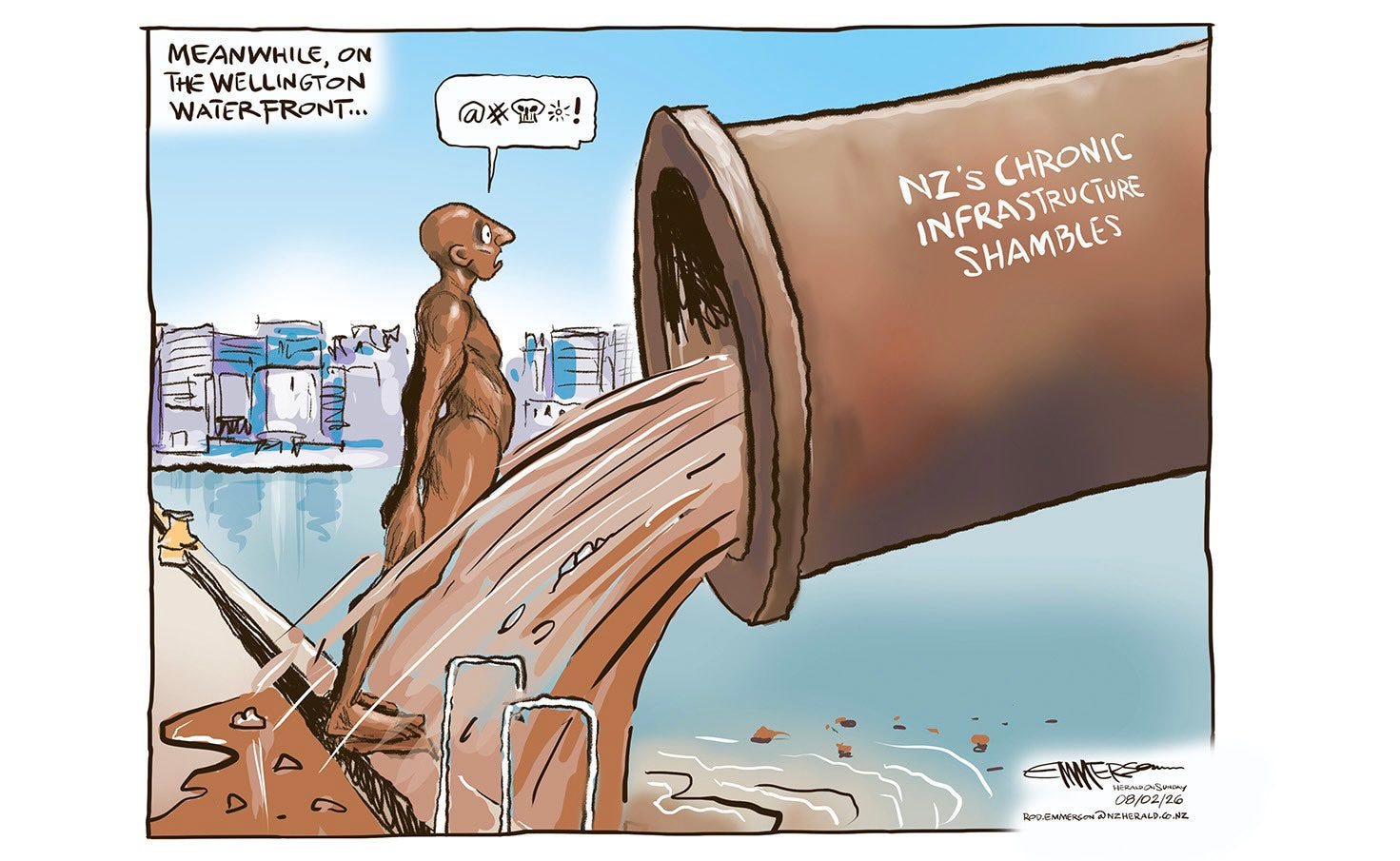
Moa Point’s failure has discharged millions of litres of raw sewage into the ocean, and is regarded as an environmental disaster, while heavily impacting residents and nearby businesses
National also repealed 3 Waters in 2024. 3 Waters was specifically set up to manage water infrastructure maintenance and upgrades, recognising a lack of specialist knowledge had hindered NZ’s ability to manage the $190 billion water infrastructure deficit across NZ.
The situation however, has been hijacked by a narrative, published by NZCPR, which appears to put decades of water infrastructure under-investment and poor contractor maintenance at the feet of Green Party MP, Tamatha Paul
Using a single decision point from 2021, the article essentially claims that Paul pushed for cycle ways over pipe maintenance, and puts the blame of Moa Point at her feet
But records show that the Council allocated a record $2.7 billion to 3 Waters that year, and also accepted funding and resource recommendations from Wellington Water.
The Council also recognised that the accelerated wastewater option would have pushed rates up by 6%.
Independent Wellington Councillor Sean Rush, in an op-ed for The Post, confirmed that unlike the NZCPR narrative, the Moa Point decision was never between pipes or cycleways at all
This hasn’t stopped National Party MPs from capitalising on it into a “hit job” on Tamatha Paul and The Green Party, using Parliamentary privilege to spread misinformation
A deeper dive below
Nicola Willis and others fan misconceptions about the Moa Plant disaster
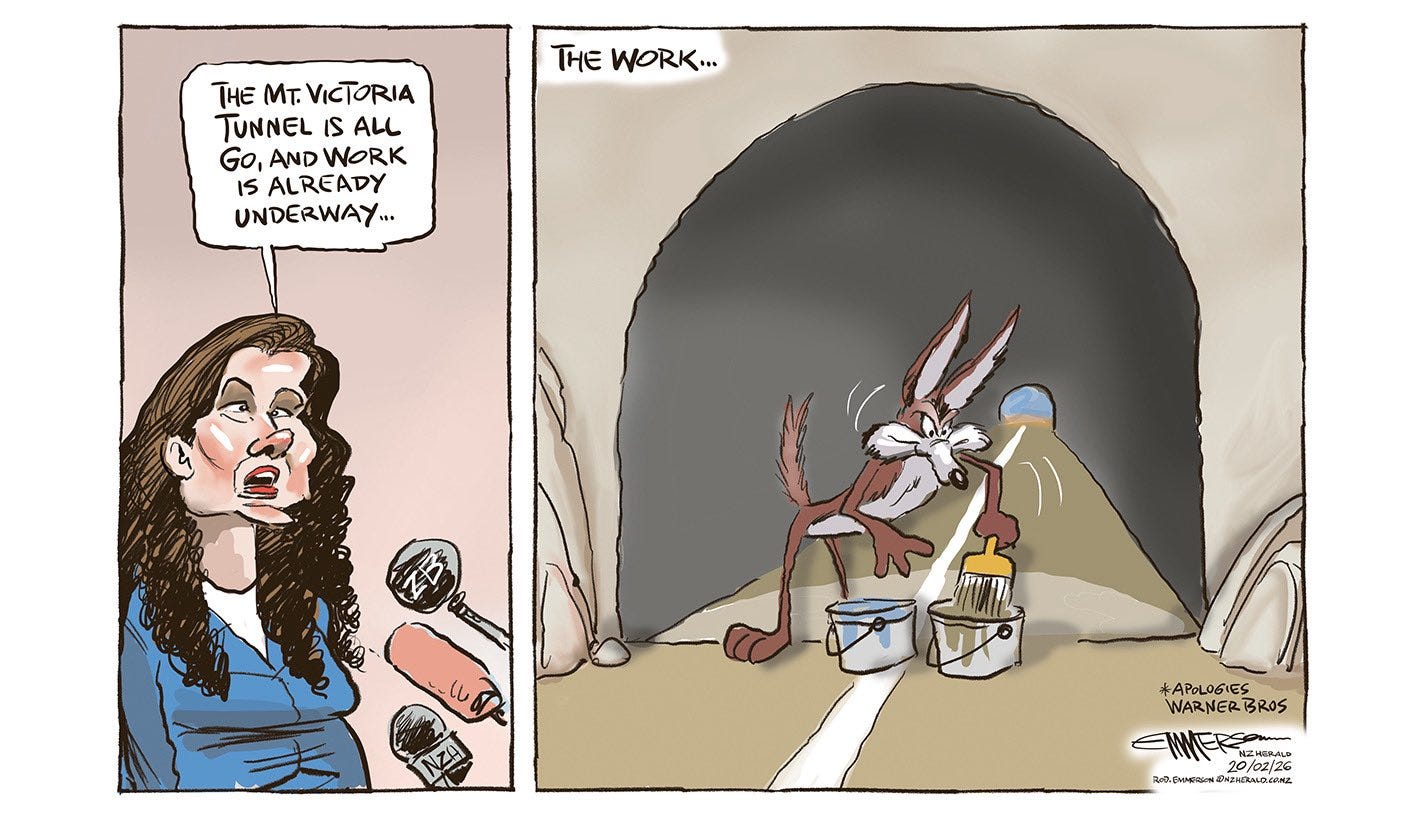
Nicola Willis was being questioned by Green Party MP Julie Ann Genter about National’s ~$4 billion Mount Victoria tunnel plans for central Wellington yesterday.
Genter pointed out the central Wellington project would be the most expensive two km build in the nation’s history, “by far”, and that the BCR (benefit cost ratio) was less than 1 i.e. it wasn’t economically efficient.
For context, NZ Transport Agency best practice is to prioritise projects with significantly higher BCRs, often exceeding 3 or 4, with 1–2.9 considered moderate and 3+ considered high.
It does not however usually approve projects that are economically inefficient - projects like the $3.8 billion Mount Victoria tunnel, which National approved before a business case was even completed.
Genter’s questioning was also in the context of recent natural disasters around Aotearoa New Zealand, which has seen bridges damaged, roads ruined, and towns requiring significant support/reconstruction.
She pressed Willis on priority and financial acumen.
In 2024, National also re-allocated billions from Labour’s $6 billion climate resilience and infrastructure fund and prioritised landlords, smoke companies and foreign technology companies instead. It has recently told storm hit Councils it doesn’t have much money to help them
The Mount Victoria questions can also be viewed in the context of National halving public transport and walking funds, leaving Wellington, Auckland and cities around NZ with a public transport funding shortfall, while pressuring Councils to increase revenue from public transport and increase fees.
But back to Moa Point.
Amid the questions about the tunnel, Nicola Willis used her time to repeat the absurd New Zealand Centre for Political Research (NZCPR) assertion that Tamatha Paul is the one responsible for the Moa Plant disaster.
That smear claims that Tamatha Paul prioritised cycle ways over waste water maintenace, echoing a Scoop article by NZCPR, the group formed by former ACT MP Muriel Newman.
NZCPR wrote:
Officers presented councillors with water investment options, including one — Water Option 3 — that contained a $391 million wastewater renewals programme…
At the same meeting, officers recommended Cycleways Option 3, with capital expenditure of $120 million over ten years.
Councillors were not choosing between water and nothing. They were choosing priority.
What happened next is the hinge moment of Wellington’s current disgrace.
An amendment was moved by then-councillor Tamatha Paul, to adopt Cycleways Option 4, expanding the programme to $226 million — nearly doubling it.
Willis used Parliamentary privilege to echo this:
“I would also reflect that sometimes those in glass houses should not be throwing stones or sitting next to Tamatha Paul who built cycleways instead of fixing the pipes.”
A New Zealand Catastrophe
Let’s be clear:
The Moa Point wastewater discharge is a disaster.
Millions of litres of raw sewage are flowing into the ocean marine ecosystems – “including vulnerable species such as the little blue penguin, or kororā, which nest along the shore – are mixed with concerns over the length and cost of disruption to those who depend on the coast for income, wellness, and recreation.”1
It’s an environmental catastrophe.
Residents are furious.
Raw sewage is exploding from toilets.
Businesses are suffering
Racism and disinformation are rearing its head within communities and on display at Moa Plant public meetings
And authorities found that Veoila, the French multinational responsible for plant maintenance had failed basic maintenance tests over the last years.
Veoila has reportedly faced multiple law suits for issues with wastewater management overseas, and has paid out millions of dollars in the USA to settle sewage failure claims.2
It had reportedly failed basic maintenance tasks in Wellington (and faced cultural scrutiny in Queenstown) too
And while Wellington Council, led by former Mayor Tory Whanau, tried to eject Wellington Water Chairperson Nick Leggett over allegations of poor contractor oversight in the past, they failed after others supported him.
It took the Moa Point disaster, an obvious legacy of contractor mismanagement from where I sit, for Leggett to resign.
But perhaps most concerning is this disaster, and the lessons the country could learn from it, is being diverted from critical conversations including the decades of water infrastructure under-investment, the lack of wisdom in repealing 3 Waters and replacing it with a $9 billion more expensive model that has yet to do much of anything, and the role of Veoila and Wellington Water.
An independent review is underway, and this is an article I didn’t want to have to write, but Willis’s tactics are both underhanded and extremely unprofessional.
And the attacks on Paul, the Council, and indeed the city and residents of Wellington is unfair.
Misinformation degrades public service and trust within communities, which is a path we don’t want to go down (case study: America)
Summary
NZCPR’s article ignores critical context in my view.
These include, but are not limited to:
WCC had already committed a record $2.7 billion to 3 Waters in the LTP
Council largely funded what was asked by Wellington Water
Councils decisions were reportedly based on recommendations by Wellington Water and experts
Council also weighed the impact of a 6% increase in rates within their considerations
The cause of Moa Point, while still under formal review, appear to be connected to the plant’s physical structure (one pipe), end of life pipes around New Zealand, and potential maintenance lapses, and contractor oversight. All of this requires formal review, so remains my speculation.
The broader issue, as defined in a National Party Cabinet paper from 2017, is decades of under-investment in water infrastructure, pipes nearing end of life that need urgent addressing, and the requirement to pool specialist expertise to evaluate priorities. Unfortunately, 3 Waters repealed by National in 2024, which involved throwing away $1.2 billion of investment. National’s model is estimated to increase costs by $9 billion.
Independent Wellington Councillor, Sean Rush’s op-ed is worth a read: "Why Wellington’s LTP decisions aren’t to blame for Moa Point”
EXTRA
In 2018, Veolia agreed with the Massachusetts state government to pay a $1.6 million penalty after it allegedly failed to properly maintain a wastewater treatment plant in the city of Plymouth.
Once again, a clear demonstration of today's management practices.
Brainless numpties contracting out maintenance and operation of plant.
We see it all over local and central govt. Get rid of employees and you get rid of institutional knowledge and it is then left to dollar driven contractors who are managed by people with no ability to judge what is required.
Interesting but typical of the managerial class, that Legget turned tail and ran when the shit literally hit the fan.
Well I guess we should not expect a much higher IQ from Muriel..
And Willis.
Cheaper funding via 3 Waters is likely to have seen more work done.
Blaming Tamatha is cheap shots.