
How the Atlas Network is shaping your life, even if you've never heard of it
Australia's National Broadcaster nails it

Morena,
Regular readers of Mountain Tūī will know of Atlas Network - a pro fossil fuel, pro tobacco, anti indigenous group operating around the world.
Since 2023, well before it featured on MATA, I’ve written extensively about its tentacles into NZ based politicians, policies, organisations (NZ Initiative / Taxpayers Union) and media.
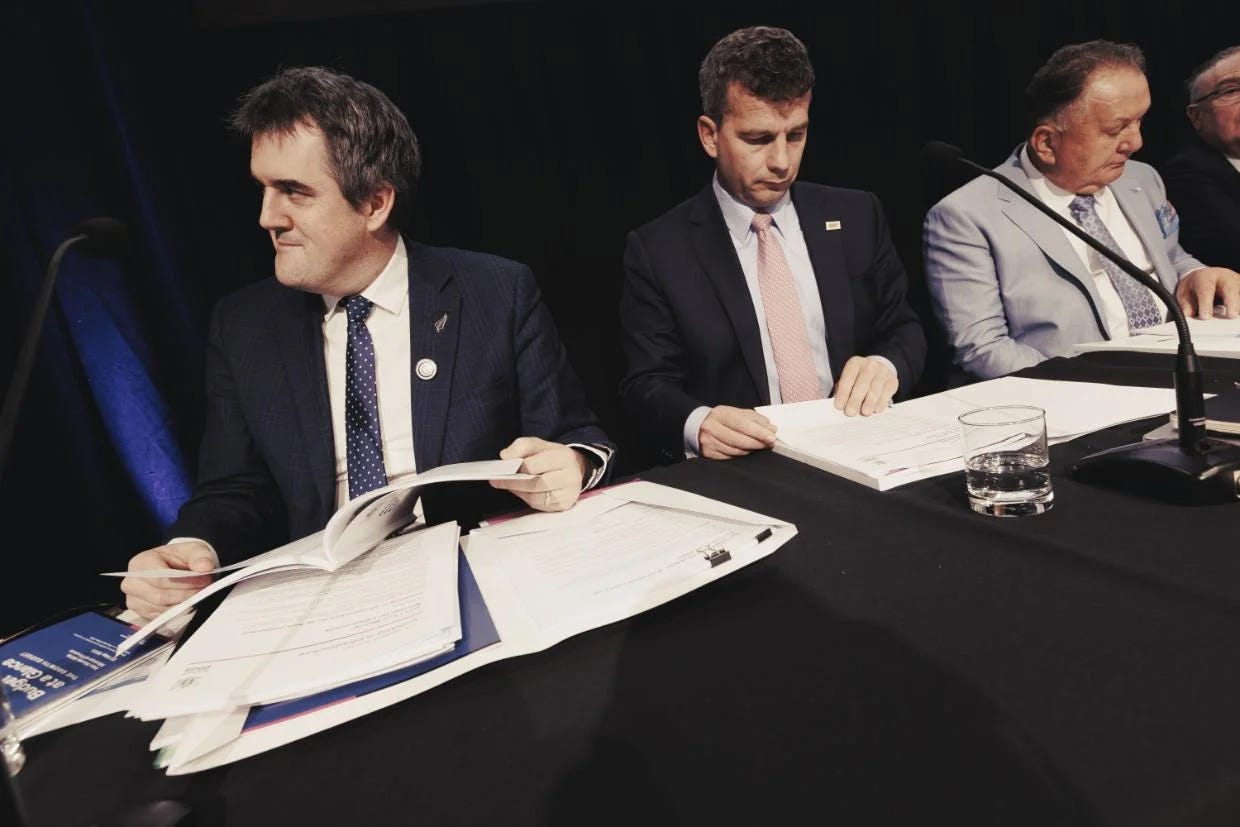
James Wilkes shares an Australian media article here - outlining Atlas’s developments in Australia and NZ.
Most significantly, these are the networks and personalities that fund and boost politicians like Liz Truss, David Seymour, and Donald Trump.
Now the excerpt from the Atlas Network article in Australia:
Neoliberal think tanks
When it comes to neoliberal think tanks, an extremely important moment came in the 1950s.
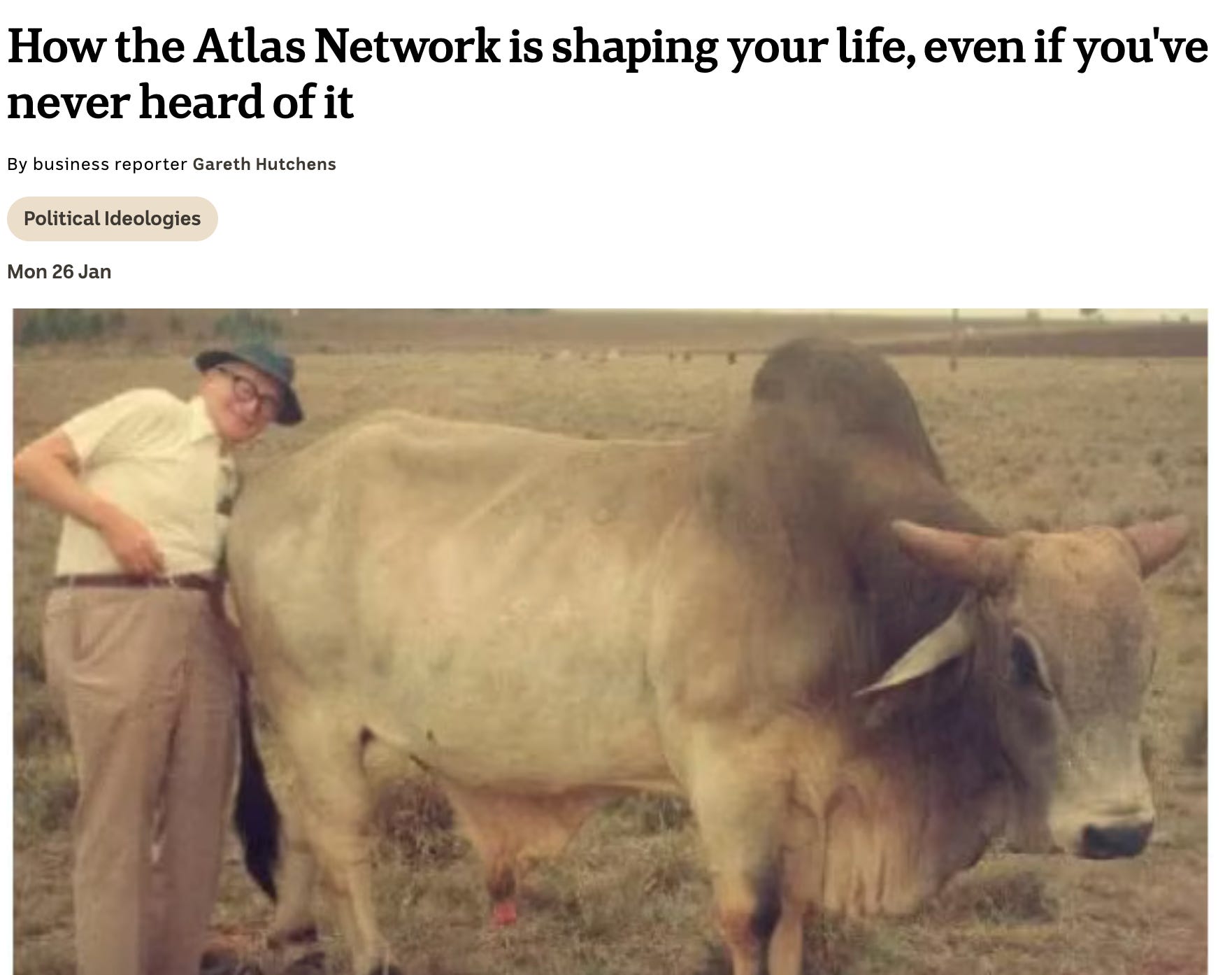
A British businessman, Antony Fisher, had been so inspired by reading Friedrich Hayek’s book The Road to Serfdom (1944) that he tracked Hayek down at the London School of Economics in 1945.
Fisher told Hayek that he was considering running for politics, as a Conservative MP, to try to make an impact, but Hayek gave him different advice:
“It was for me a fateful meeting,” Fisher later said.
“Hayek warned against wasting time — as I was then tempted — by taking up a political career. He explained that the decisive influence in the great battle of ideas and policy was wielded by the intellectuals whom he characterised as ‘second-hand dealers in ideas’ […]
“If I shared the view that better ideas were not getting a fair hearing, his counsel was that I should join with others in forming a scholarly research organisation to supply intellectuals in universities, schools, journalism and broadcasting with authoritative studies of the economic theory of markets and its application to practical affairs.”
Fisher was initially slow to act on Hayek’s advice because he decided to become a chicken farmer first, where he made a fortune.
But he eventually founded a think tank in 1955.
He called it the Institute of Economic Affairs (IEA).
And his think tank would end up playing a historic role in British society over the next few decades by promoting the radical liberal and free-market ideas of the Mont Pelerin Society.
He didn’t have overnight success, though. In the late 1950s and 1960s, during the heyday of so-called “Keynesianism,” the IEA had to toil away on the political fringes.
But the tide of opinion slowly turned in the UK.
“During the 1960s and 1970s, a continuous stream of journalists were influenced through the ‘lunches and launches’ held by the IEA at its offices,” recalled Gerald Frost.
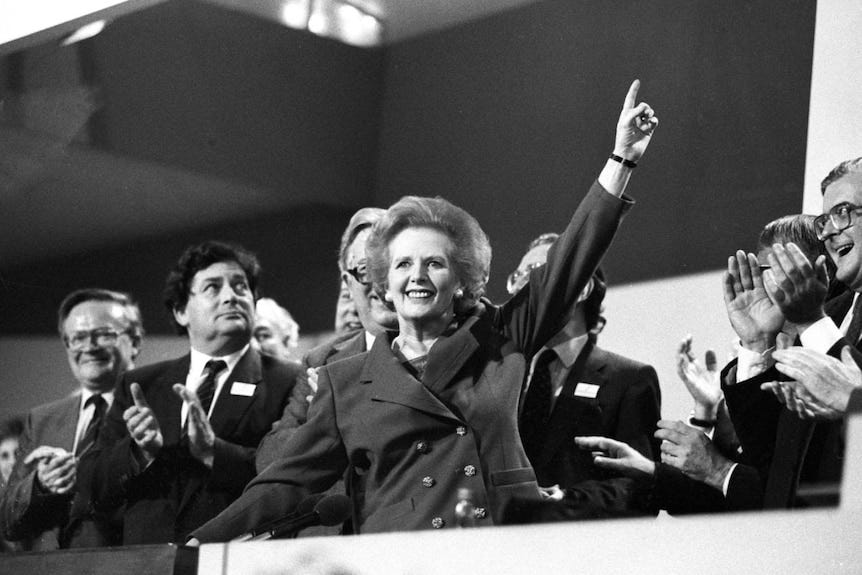
When Margaret Thatcher became leader of the opposition Conservative Party in the UK in February 1975, the IEA arranged for her to meet with Friedrich Hayek to “educate” her, given her “knowledge of economic issues was limited“.
And then in 1979, more than 20 years after the IEA had been founded, Fisher was personally thanked by Thatcher for helping her to win the national election that year:
“You created the atmosphere which made our victory possible,” Thatcher told him.
How did the IEA create the “atmosphere” that helped Thatcher to become prime minister?
An IEA publication, Waging the War of Ideas, tells the story of how Arthur Seldon, a co-founder of the IEA with Fisher, liked to use a military analogy to describe what function the IEA performed in society.
Liz Truss was linked to the IEA and widely viewed as a cultivated plant of the Atlas Network ideologies. After her disastrous Prime Ministership ended,Truss rewarded few IEA fellows as “Knights” of the United Kingdom
The Atlas Network
The incredible success of Fisher’s IEA did not go unnoticed globally, and it saw him embark on another career as a “think tank entrepreneur”.
“Starting in the mid-1970s, the IEA model began to be copied around the world, and Fisher found himself in great demand as a consultant to such fledgling groups,” noted the same IEA publication.
By the late 1970s, Fisher had helped create the Adam Smith Institute in the UK, the Fraser Institute in Canada, and the Pacific Research Institute in San Francisco.
He co-created the Manhattan Institute (along with future CIA chief William Casey) to explain the virtues of the free market to New Yorkers.
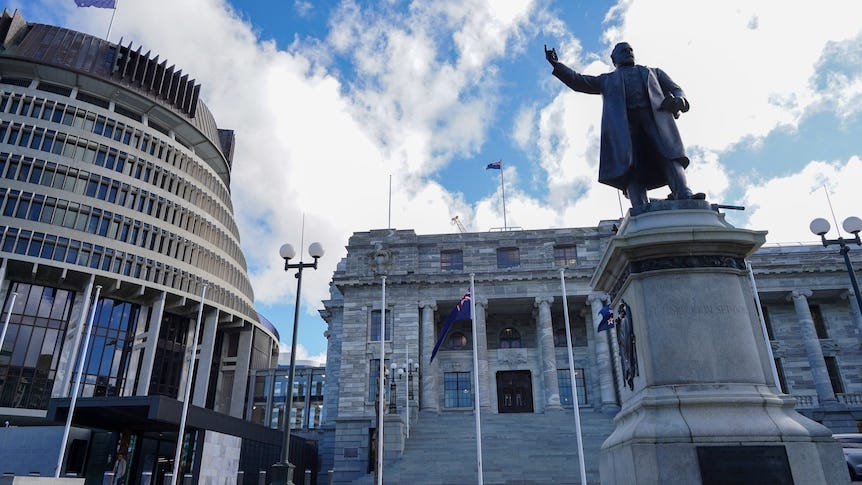
Atlas Network think tanks active in Australia, NZ
In 1979, Fisher also sought formal endorsement from Margaret Thatcher, Friedrich Hayek and Milton Friedman to help him fundraise for his growing global ambitions:
“A letter from you … expressing your confidence in the effectiveness of a proliferation of the IEA idea would be immensely valuable,” he wrote.
He secured their endorsement.
In 1981, he then incorporated the Atlas Economic Research Foundation (which is now called Atlas Network) as an organisation dedicated to helping free-market think tanks proliferate globally.
The mission of Atlas Network was to “litter the world with free-market think tanks”.
“The objective of the new organisation was to push for and help the seeding, staffing, and coaching of neoliberal think tanks across the world to ‘influence public sentiment’ and in the process ‘make legislation possible,’” write researchers Marie-Laure Djelic and Reza Mousavi.
In 2026, more than 40 years later, the Atlas Network now “partners” with more than 500 free-market think tanks around the world, with 10 of them in Australia and New Zealand.
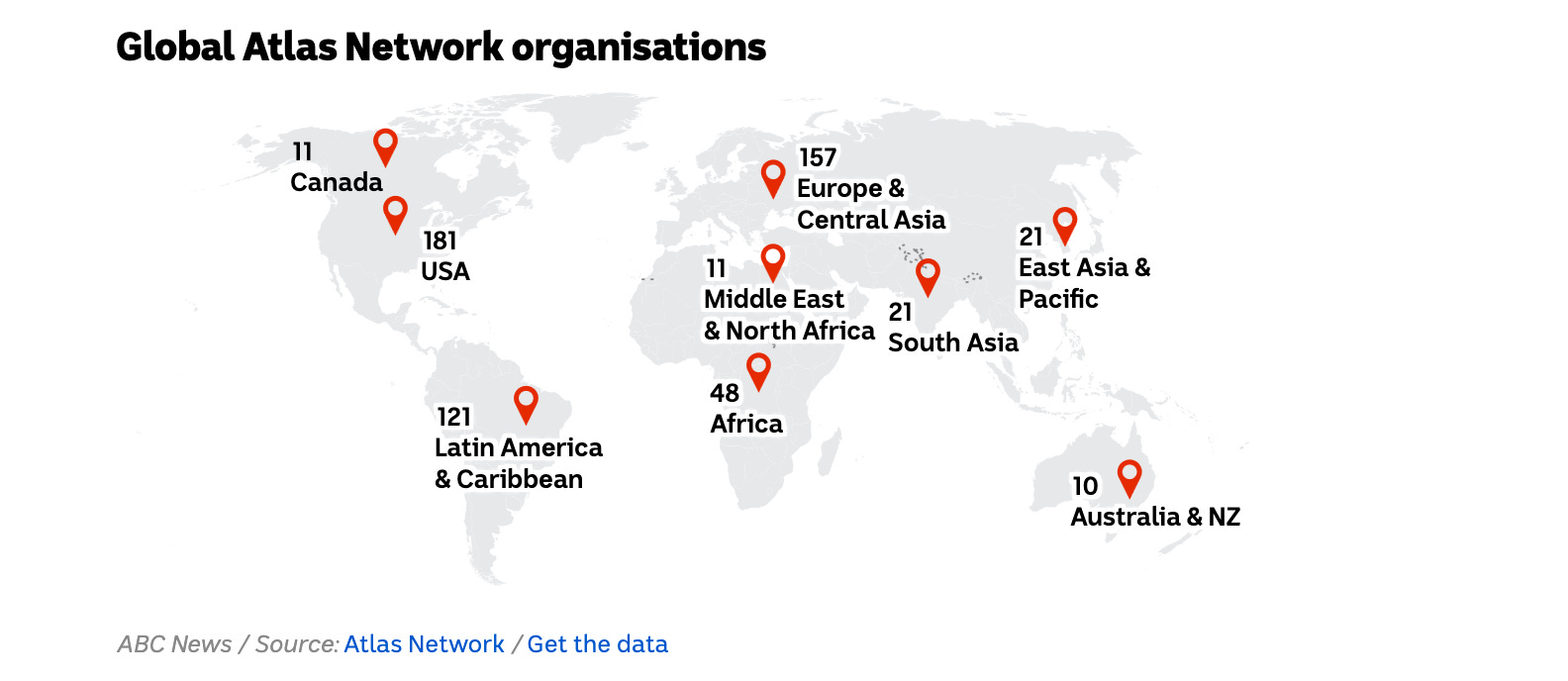
Shortly before his death in 2006, Milton Friedman said, “Atlas’s coverage of the world on behalf of liberty is truly remarkable”.
Atlas Network’s current Chair is Kiwi Debbi Gibbs, daughter of ACT Party “Godfather’s” Alan Gibbs. The money of the pro-tobacco, pro-fossil fuel, property rights group likely flows through to all right wing parties
When did neoliberalism ‘arrive’ in Australia?
The 1970s was a watershed decade for the neoliberal movement.
A series of political and economic crises provided the perfect catalyst for their “free-market” ideas to be adopted by policymakers.
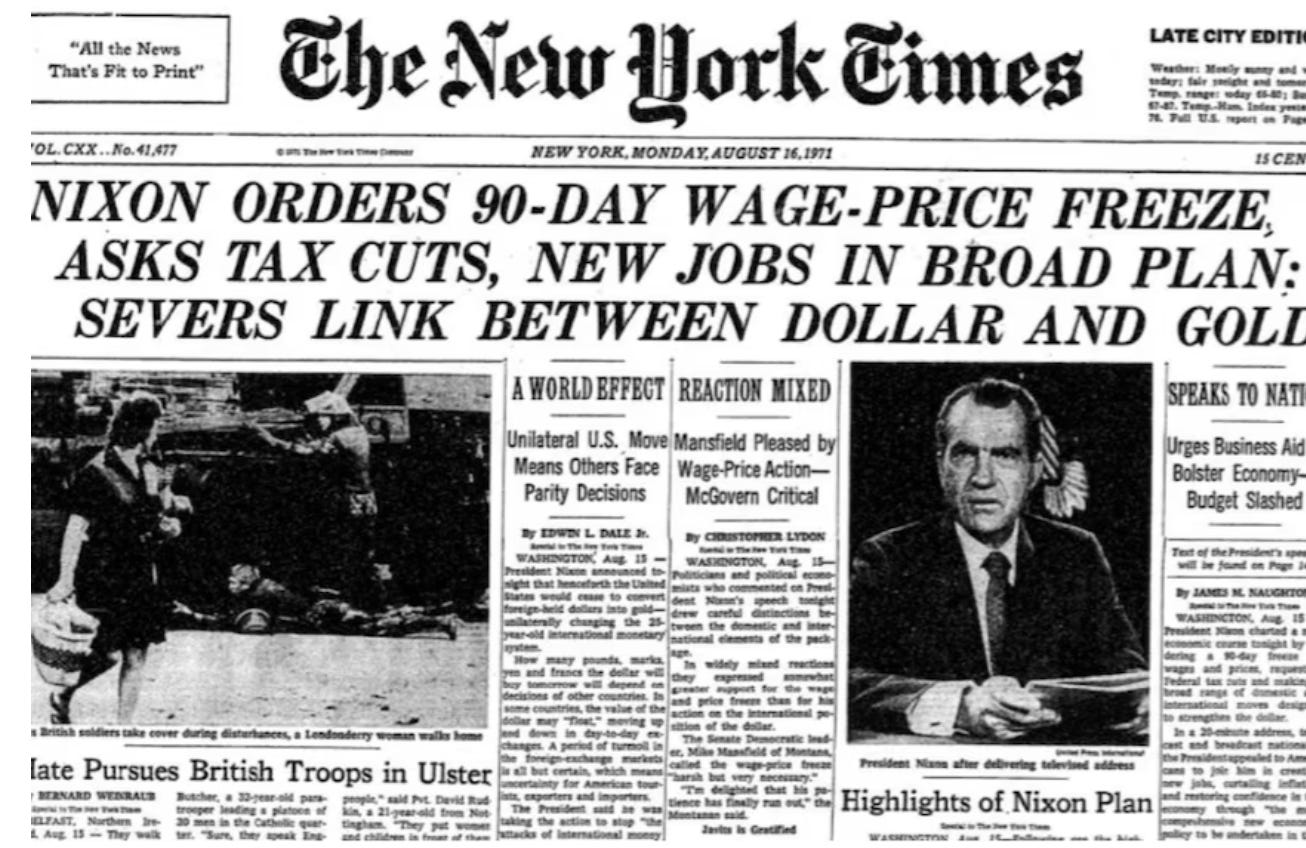
In 1971, when US president Richard Nixon suspended the US dollar’s convertibility to gold, it marked the beginning of the end of the international monetary order that had governed the global economy since World War II and supported “full employment” policies globally for almost 30 years….
……
Neoliberalism Arrived
It was the perfect situation for ideological disruption.
As Milton Friedman wrote in 1982, it was the type of moment the Mont Pelerin Society had been waiting for:
“Only a crisis — actual or perceived — produces real change,” he wrote.
“When that crisis occurs, the actions that are taken depend on the ideas that are lying around.
“That, I believe, is our basic function: to develop alternatives to existing policies, to keep them alive and available until the politically impossible becomes the politically inevitable.”
Full article: ABC
Murdoch press and right wing personalities regularly call for Australia’s national broadcaster to be disbanded and/or defunded for a reason. Here in NZ, Atlas’s Taxpayers Union regularly criticises RNZ and last year the National led Coalition dramatically cut funding for RNZ with Winston Peters saying the outlet needed to be “taught a lesson”
In New Zealand media, only Newsroom, including their journalists and Dame Ann Salmond, has substantively covered Atlas Network’s influence
This should be compulsory reading for everyone. There are some people who think NZ Labour invented neoliberalism in the 1980's and still call Labour a neoliberal party. They were followers, on from Reagan and Thatcher and the beginnings you have described. A key factor in neoliberalism is smashing unions ; Muldoon did a pretty good job of that along with wage freezes. Labour didn't in the 1980s and it was their one redeeming feature as far as I was concerned. But you are right ; labels get tossed around. It is very useful to hone in on the Atlas Network because, as you say, it is among us and in our politics. Economics of course is at the heart of it, and understanding all the jargon can be hard. Craig Renney is doing a good job, but I heard Winston take a swipe at him as a candidate for Labour yesterday in the House. I have a couple of good books called "How to argue with an economist" and "Understanding economics" both written by people from the labour movement. I see how often people fall for this "Labour ruined us in the last government" rubbish with the bewildering narratives about surpluses and wasteful spending.
Thanks so much for this, MT. Thanks also to those who sent links through yesterday. There are still people here who insist Atlas is just a conspiracy theory. Between now and 7 November, we need to publicise parallels between the US situation and the inroads being made here and the consequences for health, housing, education, etc. How can we all contribute to changing the dominant narrative?